Date: 25th March 2026.
Middle East De-Escalation Hopes Push Stocks Higher as Oil Prices Fall.

Trading Leveraged products is Risky
Markets Shift as Diplomacy Eases Immediate Fears
Global markets are showing signs of relief as diplomatic efforts between the United States and Iran begin to gain traction. After weeks of heightened volatility driven by geopolitical tensions, investors are starting to price in the possibility of a near-term de-escalation.
Equity markets have moved higher, while oil prices have retreated from recent highs, reflecting a shift in sentiment from fear-driven positioning toward cautious optimism.
However, beneath the surface, the situation remains far from resolved.
Oil Prices Fall as Risk Premium Is Reduced
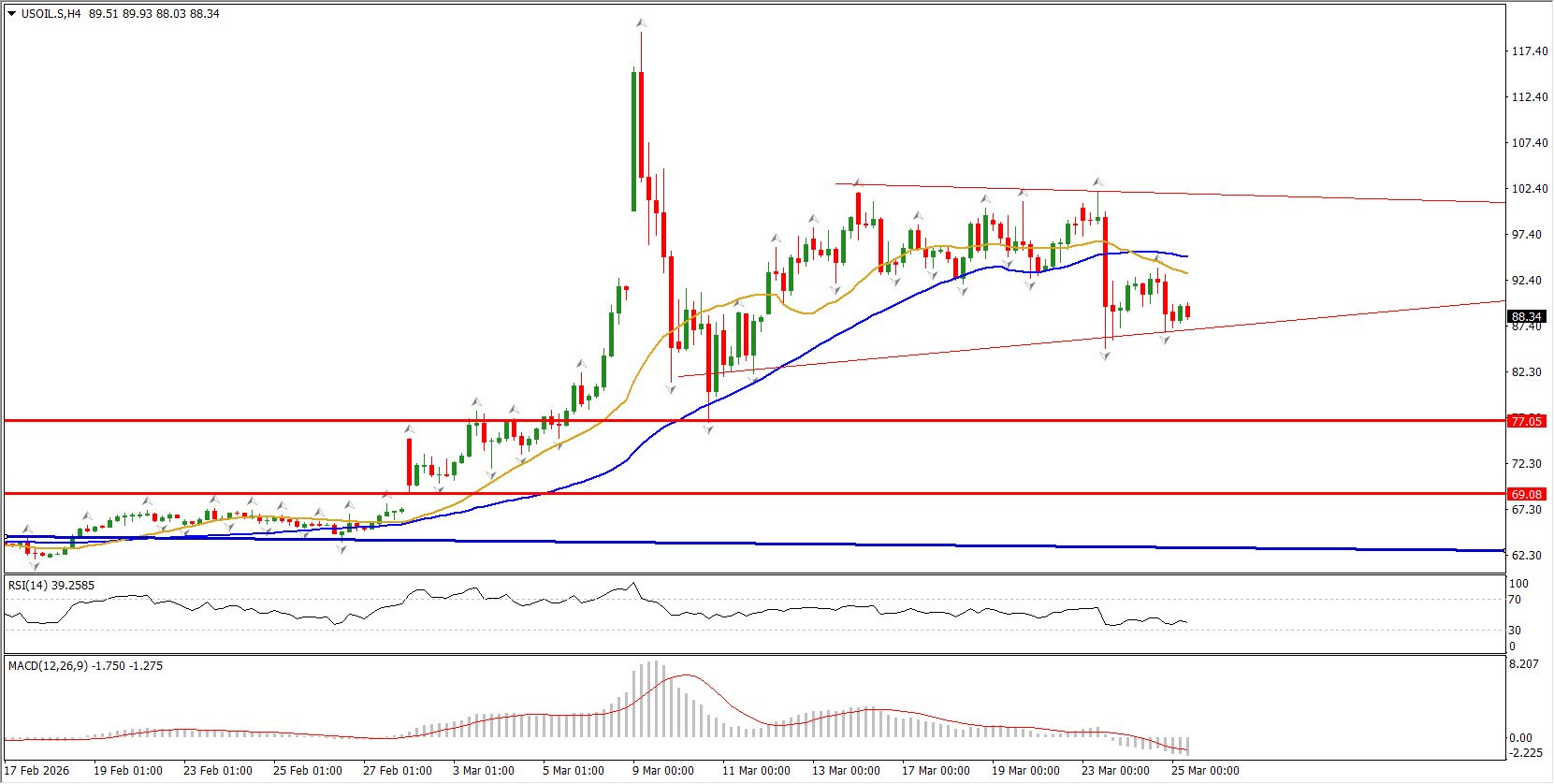
Crude oil has been at the centre of recent market volatility, acting as the primary barometer of geopolitical risk. As reports emerged of a proposed 15-point plan aimed at ending the conflict, alongside discussions of a potential temporary ceasefire, traders began unwinding positions that had priced in prolonged disruption.
Brent crude fell toward the $97 level, while West Texas Intermediate traded near $89 per barrel. This move reflects a partial removal of the geopolitical risk premium that had built up during the escalation phase. However, the decline should not be interpreted as a full normalisation of market conditions.
The Strait of Hormuz Remains the Key Variable
Despite the pullback in oil prices, a critical risk factor remains unresolved: the Strait of Hormuz. This strategic waterway is responsible for a significant share of global oil and gas flows, and current restrictions on tanker movement continue to disrupt supply chains. Even partial limitations can have an outsized impact on pricing, particularly in a market already sensitive to geopolitical developments.
For traders, the status of the strait is arguably more important than diplomatic headlines. A confirmed reopening would reinforce the current risk-on sentiment, while further restrictions could quickly reverse recent price declines.
Equities Gain as Inflation Concerns Ease
Equity markets have responded positively to the drop in oil prices, with futures linked to the S&P 500 moving higher. Lower energy costs help ease inflationary pressures, which in turn can reduce expectations for further monetary tightening.
This dynamic has supported a broader risk-on environment, with investors rotating back into equities as worst-case scenarios appear less likely in the short term.
However, the sustainability of this move depends heavily on whether diplomatic progress translates into tangible outcomes.
 Geopolitical Landscape Remains Fragile
While market sentiment has improved, developments on the ground suggest that risks remain elevated. Military activity between Iran and Israel continues, and Tehran has shown limited willingness to engage in direct ceasefire negotiations.
At the same time, Iran has renewed calls for a regional security alliance excluding the United States and Israel. This proposal highlights a broader strategic shift toward regional realignment and underscores the challenges of achieving a coordinated de-escalation.
Such dynamics point to a more fragmented geopolitical environment, which could sustain volatility in global markets over the medium term.
A Headline-Driven Environment for Traders
The current market environment is highly reactive, with price action driven largely by headlines rather than confirmed developments. Oil, in particular, has become a real-time gauge of geopolitical sentiment, while equities are responding to shifts in inflation expectations and risk appetite.
For traders and investors, this creates both opportunities and risks.
Short-term moves may be sharp and unpredictable, requiring disciplined risk management and a focus on key catalysts, including:
* Updates on diplomatic negotiations
* Developments in the Strait of Hormuz
* Escalation or de-escalation in military activity
Conclusion: Optimism Builds, but Risks Persist
Markets are currently pricing in the possibility of de-escalation, leading to a rally in equities and a pullback in oil prices. However, the underlying risks have not disappeared.
The path forward will depend on whether diplomatic efforts translate into concrete actions, particularly regarding the reopening of critical energy routes and a reduction in military tensions.
Until then, volatility is likely to remain a defining feature of the market landscape.
Always trade with strict risk management. Your capital is the single most important aspect of your trading business.
Please note that times displayed based on local time zone and are from time of writing this report.
Click
HERE to access the full HFM Economic calendar.
Want to learn to trade and analyse the markets? Join our webinars and get analysis and trading ideas combined with better understanding of how markets work. Click
HERE to register for FREE!
Click HERE to READ more Market news.
Andria Pichidi
HFMarkets
Disclaimer: This material is provided as a general marketing communication for information purposes only and does not constitute an independent investment research. Nothing in this communication contains, or should be considered as containing, an investment advice or an investment recommendation or a solicitation for the purpose of buying or selling of any financial instrument. All information provided is gathered from reputable sources and any information containing an indication of past performance is not a guarantee or reliable indicator of future performance. Users acknowledge that any investment in Leveraged Products is characterized by a certain degree of uncertainty and that any investment of this nature involves a high level of risk for which the users are solely responsible and liable. We assume no liability for any loss arising from any investment made based on the information provided in this communication. This communication must not be reproduced or further distributed without our prior written permission.